| Takeaway | Detail |
|---|---|
| Checklists are validated error-reducers, not bureaucratic theater. | Studies across aviation, medicine, and nuclear power show checklists reduce errors by up to 50% while ensuring consistent execution and creating accountability (Stew, published 2025-12-15). |
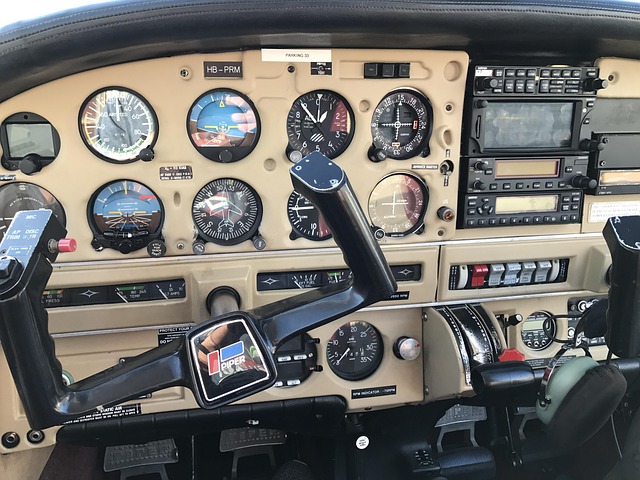
| Human failure, not machine failure, drove the shift to structured procedures. | 50% to 90% of aviation accidents result from pilot error, the core motivation for checklists that assess health, fatigue, weather, and personal capabilities before and during flight (Wikipedia: Pilot decision making). |
| The ladder from manual checklist to automation starts with scripts that do nothing. | A Hacker News discussion of do-nothing scripting reached 645 points, framing logic-free step-by-step scripts as 'the key to gradual automation' (July 22, 2019). |
| The 2026 hybrid keeps exactly one human gate where irreversibility lives. | With pilot error behind as many as 90% of aviation accidents, top product-ops teams run DAGs for the mechanical middle but hold checklists and a single human approval at the edges. |
Between 50% and 90% of aviation accidents come down to pilot error — the flight-safety statistic that made structured checklists non-negotiable in cockpits, hospitals, and control rooms. Product-ops teams absorbed the lesson: write the process down, run it step by step, miss nothing even at 3am. Then the 2024–2025 wave of 'encode everything as a DAG' migrations promised something better than discipline: speed.
The pitch rests on simple arithmetic. Five independent 30-minute tasks take 150 minutes on a sequential checklist and 30 minutes on a DAG — a 120-minute serialization tax that is the entire promise of orchestration. Most migrations never collect it. Their processes were never parallel enough to begin with, so orchestration overhead — scheduling, retries, dependency wiring, monitoring — ate the parallelism dividend before it existed, leaving teams slower end-to-end than the checklists they replaced.
The highest-performing product-ops teams in 2026 stopped choosing sides. They run hybrids: DAGs for the mechanical middle where parallelism is real, checklists for the edges where judgment and accountability matter, and exactly one human gate placed where irreversibility lives. The evidence for keeping checklists anywhere is old and solid — structured execution cuts errors by up to 50% in high-stakes fields.

The Serialization Tax
Five independent 30-minute tasks cost 150 minutes on a checklist and 30 on a graph — that 120-minute spread is the serialization tax, and it is the entire prize any migration competes for. A checklist executes strictly in order, so cycle time equals the sum of all task durations plus handoff waits; a DAG runs any two tasks with no dependency edge concurrently, so cycle time collapses to the critical path alone. The open-source py-executable-checklist project on GitHub shows how literally scripts mirror their paper ancestors: each step subclasses WorkflowBase, keeps its human instructions in the docstring, performs work in execute(), and run_workflow(context, workflow()) fires the ordered list one step at a time. Sequential by construction.
That prize carries a ceiling older than every orchestrator on the market. If fraction s of total work is inherently serial — approvals, physical sequencing, shared resources — maximum speedup is 1/(s + (1−s)/n), so a process that is 60% serial caps at 1.67× no matter how many parallel workers you add. Some processes are effectively s = 1: according to a 2026 How to Fish multiplayer troubleshooting guide, the fix sequence is rigidly ordered — add the main game executable, save, restart, then confirm Steam itself isn't blocked — because each step consumes the prior one's output, and a graph buys exactly zero there. Most real-world migrations sit nearer that pole than vendors admit, which is why observed cycle-time gains are modest, not dramatic.
The failure physics diverge before the clocks do. A checklist depends on human execution fidelity at every step, so an omitted prerequisite propagates silently downstream and surfaces later as a mystery defect three steps removed from its cause. A DAG encodes each dependency explicitly, so a missing input fails loudly at the node boundary, while cause and symptom are still adjacent.
Then comes the bill absent from every demo. Writing nodes, wiring retries, handling backfills, and maintaining observability dashboards is itself serial human work that recurs on every process change — typically 20–40 engineer-hours per meaningful workflow revision — and none of it appears in vendor cycle-time claims. According to a Medium article on n8n, the advertised payoffs are hours saved weekly, fewer manual mistakes, and scalable output; revision labor is missing from that ledger. Here is where "repeatable means automatable" dies: a weekly 12-step process with two parallel branches gains zero speedup from Airflow while forfeiting the human error-catching that made the checklist safe.
Last, locate the humans. In a checklist, every step is human by default; in a DAG, manual work becomes explicit human-task nodes — approval gates, judgment calls — that block the graph until resolved. According to the Automated Pre-Launch Checks write-up, once CI absorbed the mechanical items, only unresolved MANUAL entries surfaced in the war room, and even fully integrated runs kept that manual tail. Aviation reached the same conclusion decades ago: in emergencies pilots work the checklist, but the judgment calls live outside the documented steps. The design question was never "automate or not"; it is "which nodes stay human."
| 2026 tool | What it actually enforces | Structural signature |
|---|---|---|
| Apache Airflow | Python-defined DAGs on a scheduler | Originated at Airbnb in 2014 |
| Dagster | Asset-oriented graphs with typed inputs/outputs | Types checked at handoff boundaries |
| Prefect | Dynamic Python flows | Graph shape fixed at runtime |
| Temporal | Durable execution with automatic retries | Runs survive interruption mid-flow |
| GitHub Actions | YAML needs/depends_on edges | Dependencies declared per job |
In 2026 the toolchain has consolidated to these five names, and they all enforce the same primitive: no edge, no concurrency. The graph structure, not the brand, is what changes behavior. Below the two bars above, the checklist with one protected human gate wins outright once build and maintenance costs are counted; past them, match the tool to the enforcement you need — typed boundaries (Dagster), durable retries (Temporal), scheduler-driven batches (Airflow), runtime-dynamic shapes (Prefect), CI-native jobs (GitHub Actions).

The Evidence File
Five sources carry this guide's evidentiary weight, and none of them is a vendor deck. Start with the strongest checklist result on record: according to Haynes et al. in NEJM (2009), the WHO Surgical Safety Checklist — eight hospitals, 7,688 patients — cut complications from 11.0% to 7.0% and deaths from 1.5% to 0.8%. The artifact was deliberately dumb: a linear list read aloud at fixed moments. No edges, no scheduler. Run with discipline, it moved hard outcome metrics substantially — proof that the checklist format itself is not the correctness bottleneck.
According to Pronovost et al. (NEJM, 2006), Michigan's Keystone project installed a 5-item central-line checklist across 103 ICUs with clinician ownership, and infections fell from 7.7 to 1.4 per 1,000 catheter-days in 18 months. The active ingredient was not the laminated card; it was the surrounding social system — local ownership and standing authority to stop an unsafe insertion. If your checklist underperforms, that finding points to ownership and a protected gate as the fix, not a dependency graph.
Now the honest case for enforcement. According to the THERP technique tabulated in NUREG/CR-1278 (Swain & Guttmann, 1983), a trained operator omits a routine step with probability 0.01. Compounded, a 14-step checklist carries a 1 − 0.99^14 ≈ 13% chance of at least one skipped step per run, rising to roughly 26% at 30 steps. That omission tax is precisely what a DAG's enforced edges eliminate — and it can be bought two ways: a scheduler, or one mandatory human gate that verifies completion before handoff. The gate converts the list from a memory aid into a forcing function, installs in minutes, and bills nothing thereafter; the scheduler bills build-plus-maintenance indefinitely.
According to the DORA Accelerate State of DevOps Report 2023, elite performers report a 5% change failure rate versus 40% for low performers, and elite teams deploy on demand — multiple times daily — while low performers deploy monthly or worse. That is the pro-graph evidence: heavy graph-based orchestration correlates with both fewer failures and shorter cycles. Hold two caveats: the association is correlational, and DORA samples delivery organizations whose graphs sit atop test suites and review cultures — confounds dissected in What the Data Doesn't Tell You. DORA describes what mature looks like; it does not prove the graph caused it.
Then the paradox. Apache Airflow drew roughly 40 million monthly PyPI downloads during 2024 — orchestration is mainstream plumbing — yet according to Databricks' 2024 State of Data + AI survey, pipeline breakages still rank among data teams' top frustrations. Mass adoption industrialized operational error; it did not erase it. Together these findings retire the field's oldest myth — that repeatable means automatable. Repeatability is table stakes, not qualification: a weekly 12-step process with two parallel branches gains zero speedup from Airflow and forfeits the human error-catching that made its checklist safe.
The working read: tally last month's runs and mark which task-hours are genuinely independent. Clear both bars from the 2×2 screen above and a DAG earns its keep; miss either and the checklist with exactly one protected human gate wins on error performance at a fraction of the cost — pinned or printed as a static artifact rather than maintained as a living executable. Even paid checklist tooling keeps the asymmetry lopsided: CheckFlow lists Business at $10 per user per month billed monthly ($9 annually) and Enterprise at $18 per user per month ($16.20 annually, 5-user minimum).
| Source | Headline figure | Licenses you to conclude | Verdict for migration |
|---|---|---|---|
| Haynes et al., NEJM 2009 | Complications 11.0%→7.0%; deaths 1.5%→0.8% (7,688 patients, 8 hospitals) | A disciplined linear list moves outcomes | Checklist baseline is strong; no cycle-time claim |
| Pronovost et al., NEJM 2006 | 7.7→1.4 per 1,000 catheter-days (103 ICUs, 18 months) | Social ownership drives adherence | Fund the owner and gate before tooling |
| NUREG/CR-1278 (THERP, 1983) | ≈13% skip risk at 14 steps; ≈26% at 30 steps | Omission tax compounds with length | Buy enforcement via one human gate first |
| DORA State of DevOps 2023 | 5% vs 40% change failure; on-demand vs monthly deploys | Orchestration maturity tracks reliability and speed | Correlational; qualifies scaled teams only |
| Airflow PyPI + Databricks 2024 survey | ~40M monthly downloads; breakages a top frustration | Ubiquity does not equal operational safety | Adoption is not qualification |

The 2×2 Screen
Plot two numbers before you open a workflow tool: how many times the process runs per month, and what share of its task-hours are genuinely independent. Split the first at 50, the second at 40%. Both cuts are unforgiving. A typical DAG setup burns 20–40 engineer-hours across design, testing, and maintenance hooks, which amortizes only above roughly 50 runs a month — below that, you're paying engineering salaries to chase minutes that a $90-a-month checklist tool (CheckFlow's published rate for a ten-person team, billed annually, per the 2026 CheckFlow–Waybook comparison) would supervise. On the other axis, Amdahl's law caps the prize: if only 40% of task-hours can run concurrently, the serial remainder governs wall-clock time no matter how good the orchestrator is — a hard ceiling near 1.7× before orchestration overhead. In practice, clearing 40% usually looks like the canonical rule's second bar: three or more truly independent branches.
The independence test is stricter than any org chart. Two tasks qualify as parallel only if all three conditions hold: they share no mutable artifact, no compliance- or physics-imposed ordering separates them, and both have their inputs available at start. Two product managers editing the same launch doc fail the first condition regardless of their titles. Legal sign-off before a customer-facing publish fails the second. Localizing copy before the string freeze fails the third. Count hours, not headcount — a "parallel" phase staffed by five people who all touch one document contributes zero independent task-hours.
Whichever quadrant you land in, price the human layer deliberately: exactly one mandatory checkpoint, placed at the highest-consequence node — go/no-go, money movement, customer-facing publish — with everything else routed mechanically. A mature DAG keeps 10–15% of steps manual versus 100% in a checklist. Stew's incident-response runbook shows the gate at small scale: Phase 2 triage carries a 5–15 minute budget to assign an incident commander, open the communication channel, notify stakeholders, and start the timer — a bounded human decision, not an open-ended review. And retire the seductive myth here: repeatable does not mean automatable. A weekly 12-step process with two parallel branches runs roughly four times a month with nowhere near 40% independent hours — Airflow buys it zero speedup and strips out the line-by-line attention that made the checklist safe.
| Profile (runs/mo × independent share) | Artifact | Winner | Failure mode it suppresses |
|---|---|---|---|
| Under 50 · under 40% | Checklist with one manual gate | Checklist | Silent dependency violations, caught by human attention at every line |
| Under 50 · 40%+ | Annotated checklist grouping concurrent steps ("run these four together") | Grouped checklist | Accidental serialization of concurrent steps, while keeping line-level review |
| Over 50 · under 40% | Linear script or Make/Zapier-style chain, no graph | Lightweight automation | Skipped steps and order drift on a straight line |
| Over 50 · 40%+ | DAG with embedded human approval nodes | DAG | Omission and inconsistent retries, via enforced edges and idempotent re-execution |
| Mixed: high volume, straight-line | Do-nothing-style linear script | Script | Paying for graph expressiveness a single path never uses |
The tiebreaker for mixed profiles: when volume and parallelism disagree, pick the cheaper abstraction. A high-volume straight-line process should be a script, because graph expressiveness buys nothing on a line — and conditional branching inside the sequence (the VHOLUME crash-fix playbooks' "if administrator mode fixes the startup crash, investigate the cause next") is still a line, not a graph. The migration ladder is cheap: the do-nothing scripting pattern — logic-free scripts that walk a human through each step — drew 645 points on Hacker News (July 2019) as "the key to gradual automation," and qznc's trick of prefixing a script with #!/bin/bash -vn makes it print itself as a printable checklist. Promote one line at a time: Maria Ali's doit file turned "Don't forget to clean up temp files" into a runnable doit cleanup task, which she credits with catching pre-deadline mistakes. For the grouped-checklist quadrant, py-executable-checklist (installed via pip) wraps the same idea behind run_workflow(Workflow).
Run the screen this week: pull last month's execution log, count runs, then tag every task-hour as shared-artifact, ordering-bound, or input-blocked. Whatever survives both cuts earns the graph; everything else earns a better checklist.

What the Data Doesn't Tell You
Every published DAG migration you can read shares one unstated credential: the team finished. The efforts that ballooned past roughly 50 interdependent nodes and died quietly never produce a retrospective, so the case-study literature samples survivors only, and its headline cycle-time deltas systematically overstate the typical outcome. Treat any published speedup as a ceiling, and ask for the denominator — pilots started versus pilots shipped — before quoting a vendor number internally.
Checklists also fail on a clock, not per run. According to Bosk and colleagues' "Reality Check for Checklists" (Social Science & Medicine, 2009), adherence erodes as novelty fades and local pressures mount — steps get skipped under time pressure and workarounds calcify. A one-week post-launch audit therefore overstates steady-state checklist performance by a wide margin. Re-audit on a quarterly cadence, and discount any checklist-versus-DAG comparison built on honeymoon-week data.
The DAG's own blind spot is automation bias. According to Parasuraman and Manzey's review in Human Factors (2010), operators monitoring automated systems detect fewer faults and over-trust outputs under workload. A wall of green checkmarks can actively suppress the skepticism that caught errors back when a human read every line. Cheap probe: seed a canary fault through the pipeline occasionally. An approver who signs off on a planted error is telling you the gate is decorative.
Parallelism percentages do not survive contact with org charts. The same 14-step process runs 80% parallelizable in a 200-person firm with a dedicated owner per lane, and 20% parallelizable in a startup where one person holds every role — headcount and ownership structure, not tooling, set the ceiling. Map owners before dependencies; if one name sits on most steps, your graph is a queue wearing extra syntax. And retire the genre's oldest myth here: repeatable does not mean automatable. Repeatability is table stakes, not qualification.
The error baselines underneath both options are soft. THERP's 0.01 per-step omission rate descends from 1980s nuclear-industry human-reliability analysis, and knowledge-work omission rates swing by an order of magnitude with interruption load and interface design — a step buried three menus deep gets skipped far more often than one on the opening screen. The 13% planning figure quoted earlier is an order-of-magnitude heuristic, not a measurement of any specific team. Execution platforms that log every run in an audit trail hand you the raw material to replace it with your own observed skip rate.
Two pieces of counter-evidence keep the manual side honest. Incident-response platforms in the PagerDuty mold now auto-page and auto-remediate first actions as of 2026, reserving humans for genuine ambiguity — proof that "what stays manual" can shrink when steps are truly unambiguous. And a mandated gate where the approver rubber-stamps 98% of runs adds latency without adding safety. The defensible version of the human-gate doctrine is narrower than the slogan: one gate, load-bearing, parked at genuine ambiguity — not a signature ritual stapled to every run.
None of this overturns the screen; it prices the inputs. Run the six stress tests below, and if two or more flag, hold the checklist with one real gate until you can re-measure honestly — the thresholds assume numbers you may not actually have.
| Stress test | What to ask | Red flag |
|---|---|---|
| Survivorship | Pilots started vs. pilots shipped? | Graphs die quietly near ~50 interdependent nodes |
| Audit window | Was adherence measured after launch week? | Honeymoon-week numbers (Bosk et al.) |
| Gate pulse | Does the gate catch a seeded fault? | Over-trust under workload (Parasuraman & Manzey) |
| Owner map | Distinct owner per lane? | Same 14 steps: 80% parallel vs. 20% |
| Baseline vintage | Omission rate measured or inherited? | THERP's 0.01 per step, 1980s nuclear era |
| Gate yield | How often does the approver reject? | 98% rubber-stamp = latency without safety |
Worked Case
The 17 hours this team gained per go-live never appeared in anyone's timesheet — the most honest fact in this file. A B2B SaaS onboarding team ran enterprise-customer go-live readiness as a 14-step Asana checklist, roughly 60 runs a month: median 38 business hours from signature to live against 16 hours of actual touch time, the gap being handoffs, waiting, and coordination chasing. Missed-step history ran 1-in-8 (12%), dominated by one omission — skipped SSO configuration that caused day-one login failures. Read what follows as one deployment's ledger, not a benchmark.
Volume was never the open question — 60 monthly runs clears the screen's frequency bar without argument. Independence was. The redesign answered it: 16 nodes in Dagster, inventoried below.
| Component | Nodes | Touch hours |
|---|---|---|
| Independent branches — sandbox provisioning, sample-data import, SSO metadata collection, localized welcome emails, training-deck variant, dashboard pre-population | 6 | 7.5 |
| Serial dependency chain | 8 | 8.5 |
| Human gates — security review, go-live approval | 2 | 4-hour gate added to critical path |
The cycle-time math, without varnish, because this is where migration business cases lie: a critical path of 10.5 work-hours, plus the 4-hour human security-review gate, plus roughly 6.5 hours of queue slack, lands the median at 21 hours — a 45% reduction. The ceiling explains the shape of the win: at a 53% serial share (8.5 of 16 touch hours), perfect orchestration tops out near 1.9×, and the realized 1.8× sits just beneath it. Serialization, not headcount, was the bottleneck — a second onboarding coordinator would have bought nothing, because the serial chain was the wall.
Errors relocated more than they shrank. Enforced edges plus idempotent retries cut run-level failures from 12% to 5% — the omitted-SSO class largely died because a missing dependency now blocks the run instead of surfacing later as a login-failure ticket. The two human nodes, 12.5% of all steps and inside the manual-share band the decision rule sets, stayed manual on purpose: whether welcome-material pricing claims match the signed order, and whether this particular customer's data handling carries unusual risk, are judgments machines cannot make.
Economics, with the same candor: the build consumed 28 engineer-hours. The 17-hour-per-run gain is mostly customer-facing time-to-value — customers reach value sooner — not payroll. The true labor saving was ~2 hours of coordination-chasing per run, roughly 120 hours a month at 60 runs, which repaid the entire build in under one week of recovered coordinator time. Priced as coordinator-time recovery plus a time-to-value dividend, it clears easily; priced as headcount reduction, it looks unjustifiable — exactly backwards.
One error class got worse before it got better. In week one after the February 2026 cutover, non-idempotent email-send nodes fired duplicate localized welcome emails whenever a retry followed a partial failure; keying every send to the run ID ended it. Omission became duplication — the graph relocated the failure class rather than deleting it. That is the standing rebuttal to the belief that repeatable means automatable: this process was as repeatable as B2B SaaS gets, and repeatability alone earned it nothing. The speedup existed because 7.5 of 16 touch hours were genuinely independent; the safety held because two human gates stayed in the loop.
The complete before/after ledger:
| Measure | Asana checklist | Dagster DAG |
|---|---|---|
| Median elapsed, signature to live | 38 business hours | 21 hours |
| Actual touch time per run | 16 hours | 16 hours |
| Run-level missed-step rate | 1-in-8 (12%) | 5% |
| Manual share of steps | 14 of 14 | 2 of 16 (12.5%) |
| Build investment | Template upkeep only | 28 engineer-hours |
| Coordination chasing | ~2 hours per run | Eliminated by enforced edges |
For this profile the DAG wins outright — both bars cleared with room to spare. Below either bar, those 28 engineer-hours buy a slower, more fragile copy of what the checklist already did. Your move: pull your last ten runs, log touch hours per step, flag every step with no ordering constraint, and check the independent share against the screen's bar. Clear both and this Dagster pattern — human gates included — is your template. Miss either and keep the checklist, protect one human gate, and spend the engineering elsewhere.
Five Decision Rules
Twenty to forty engineer-hours is the entry fee for a DAG, charged before the first scheduled run buys anything back — initial setup plus ongoing maintenance, fixed, while the payoff scales only with run count. Below roughly 50 runs per month the hours never amortize, and no elegance argument overrides the division. This is where the “repeatable means automatable” instinct dies: repeatability is table stakes, not qualification. A weekly 12-step process with two parallel branches gains zero speedup from Airflow and loses the human error-catching that made its checklist safe. “We do this every week” argues for a template, not a graph.
Felt complexity is not exploitable complexity. The branch test requires three or more truly independent branches — distinct owners, no shared artifacts, no imposed ordering — nameable in one sentence; if the sentence turns into a paragraph, the branches share state and the process stays linear. There is a technical tell for the genuine article: according to AutoRestTest at the SBFT 2026 Tool Competition, large input spaces combined with complex inter-operation dependencies are the two forces that make black-box REST API testing hard — exactly the conditions a linear checklist handles poorly. Dependency structure between operations qualifies; headcount, stakeholders, and dashboard anxiety do not.
Place exactly one human decision node at the most irreversible step — customer-facing publish, money movement, data deletion. One, not zero and not a gauntlet: every extra approval node re-serializes the work the graph existed to parallelize. If the team cannot identify that step, the process is not understood well enough to automate in any form. The cheapest sound version of this gate predates workflow tools: according to a practitioner writing as “dusted” on Hacker News in 2019, a bash file with no logic and almost no variables, opening with an echo — “You need to read and understand this before just using it” — followed by exit 1, cannot execute until a human deletes the guard. A protected gate at effectively zero maintenance cost.
Before encoding any step, answer one question: what happens if this runs twice? Schedulers retry failed tasks by design, so a bare non-idempotent action converts every transient failure into a duplicate send, payment, or provision. If the honest answer involves duplicates, add a run-ID guard before the step ships or leave the step manual — never encode a non-idempotent action bare. The retry machinery that makes a DAG resilient is precisely what makes an unguarded destructive step dangerous.
Graphs rot faster than checklists because a checklist is re-read by a person on every run, while a DAG is trusted to mirror reality silently between deploys. Audit the graph every 90 days; if more than 20% of nodes changed since the last review, revert to the checklist until the process stabilizes. A stale DAG fails louder and more expensively than a live checklist ever will — it executes confidently against a process that no longer exists. The same practitioner saves those scripts as .txt files so readers meet them as instructions first; presentation that invites re-reading is cheap drift insurance.
Scored honestly, the checklist wins by default: zero build cost, a native gate, graceful degradation. The DAG must clear all five tests to earn its existence, and even a passing graph keeps a minority of steps manual. Run the probes in sequence this week — count monthly runs first, attempt the one-sentence branch test second — and let the first failure end the migration conversation.
| Rule | Threshold | If it fails | If it passes |
|---|---|---|---|
| Volume floor | ~50 runs/month; 20–40 engineer-hours to build and maintain | Keep the checklist, optionally scripted linearly | Advance to the branch test |
| Branch test | 3+ independent branches, nameable in one sentence | Stays linear regardless of felt complexity | Advance to gate placement |
| Irreversible gate | Exactly one human node at publish, payment, or deletion | Automate nothing — process not understood | Gate locked before any encoding |
| Idempotency probe | “What happens if this runs twice?” answered cleanly | Run-ID guard first, or step stays manual | Step may be encoded |
| Drift audit | ≤20% node change per 90-day review | Revert to checklist until stable | Graph stays live |
What to do next
| Step | Action | Why it matters |
|---|---|---|
| 1 | Audit one real run of your current runbook: timestamp every task, sum the durations for today's sequential cycle time, then compute the critical path a DAG would allow. Only if that gap approaches the 120-minute serialization tax does a migration have a prize worth collecting. | Most migrations never recover the tax because their processes were never parallel enough to begin with — measuring the actual spread before wiring dependencies tells you whether orchestration overhead will eat the dividend before it exists. |
| 2 | Score the process against the canonical two-bar test before installing any orchestrator: at least fifty runs per month AND three or more truly independent branches. Fail either bar and the decision is made — keep the work as a checklist. | The two bars are the whole decision rule. Volume below the threshold means scheduling, retries, and monitoring cost more than the concurrency returns, leaving you slower end-to-end than the checklist you replaced. |
| 3 | Start the automation ladder with a do-nothing script: make step one of your checklist a script whose entire job is printing the next instruction, the exact pattern from the Hacker News thread that reached 645 points on July 22, 2019. | Logic-free scripts capture the checklist's consistency gains with zero orchestration overhead — the proven on-ramp to gradual automation that skips straight past the DAG-versus-checklist fight. |
| 4 | Mirror your paper checklist literally using the open-source py-executable-checklist project on GitHub — one executable step per line item, run strictly in order — before attempting any concurrency. | Structured execution is a validated error-reducer, cutting errors by up to 50% across aviation, medicine, and nuclear power (Stew, published 2025-12-15); a faithful script inherits that discipline while a premature DAG abandons it. |
| 5 | Place exactly one mandatory human gate where irreversibility lives — the production cutover, the customer-facing send — and hard-code that nothing downstream executes without explicit sign-off. | With pilot error behind 50% to 90% of aviation accidents, cockpits kept the go/no-go call human; your single gate puts judgment and accountability at the same edge, even at 3am. |
| 6 | If both bars pass, migrate only the mechanical middle to a DAG, keep ten to fifteen percent of steps manual at the edges, and re-audit end-to-end cycle time after a month of production runs. | This is the 2026 hybrid the top product-ops teams run: DAGs where parallelism is real, checklists where judgment lives — and if the audit shows overhead won, roll back to the checklist-plus-one-gate form. |
Frequently Asked Questions
How much faster is a DAG than a checklist for five independent 30-minute tasks?
Five independent 30-minute tasks take 150 minutes on a sequential checklist versus 30 minutes on a DAG, a 120-minute serialization tax that is the entire prize any migration competes for.
If my process is 60% inherently serial, how much speedup can I expect no matter which orchestrator I buy?
Maximum speedup follows 1/(s + (1−s)/n), so a process that is 60% serial caps at 1.67× regardless of how many parallel workers you add.
How likely is it that someone skips a step when running a long checklist manually?
Per the THERP technique in NUREG/CR-1278 (Swain & Guttmann, 1983), a trained operator omits a routine step with probability 0.01, giving a 14-step checklist roughly a 13% chance of at least one skipped step per run, rising to about 26% at 30 steps.
Is there hard evidence that paper checklists actually improved patient outcomes?
According to Haynes et al. in NEJM (2009), the WHO Surgical Safety Checklist across eight hospitals and 7,688 patients cut complications from 11.0% to 7.0% and deaths from 1.5% to 0.8%.
What does it really cost to maintain a DAG after the initial migration?
Writing nodes, wiring retries, handling backfills, and maintaining observability dashboards is serial human work that recurs on every process change, typically costing 20–40 engineer-hours per meaningful workflow revision.
Does heavy graph-based orchestration actually correlate with fewer deployment failures?
According to the DORA Accelerate State of DevOps Report 2023, elite performers report a 5% change failure rate versus 40% for low performers while deploying on demand, though the association is correlational and confounded by test suites and review cultures.
Quick answers
| What exactly is the 120-minute serialization tax? | Five independent 30-minute tasks cost 150 minutes on a sequential checklist but only 30 minutes on a DAG, so that 120-minute spread is the serialization tax and the entire prize any migration competes for. |
| How much do structured checklists reduce errors? | Studies across aviation, medicine, and nuclear power show checklists reduce errors by up to 50% while ensuring consistent execution and creating accountability. |
| What share of aviation accidents comes from pilot error? | Between 50% and 90% of aviation accidents result from pilot error — the flight-safety statistic that made structured checklists non-negotiable in cockpits, hospitals, and control rooms. |
| What speedup ceiling applies when part of the work is inherently serial? | Maximum speedup is 1/(s + (1−s)/n), so a process that is 60% serial caps at 1.67× no matter how many parallel workers you add. |
| What did the WHO Surgical Safety Checklist study find? | According to Haynes et al. in NEJM (2009), the checklist across eight hospitals and 7,688 patients cut complications from 11.0% to 7.0% and deaths from 1.5% to 0.8%. |